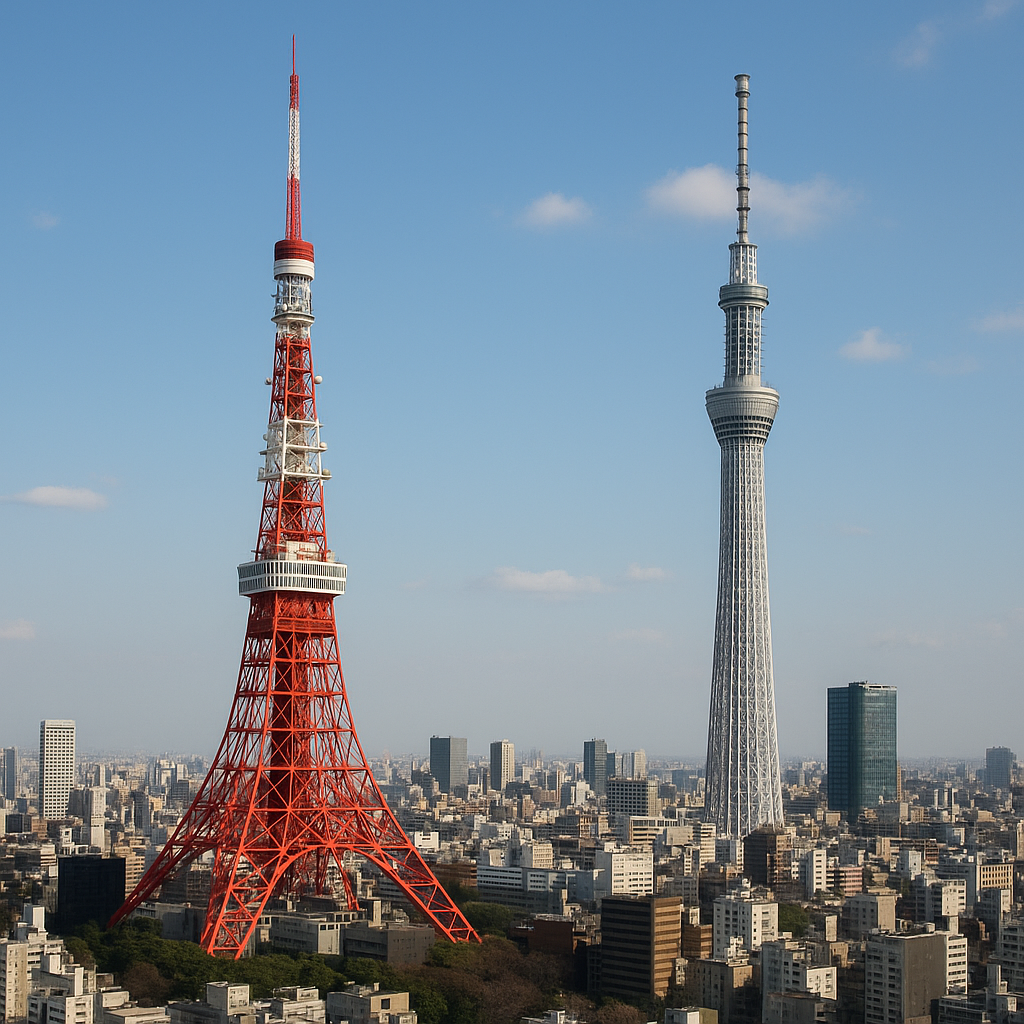
Japan’s capital city of Tokyo boasts two of the world’s most recognizable communication towers: Tokyo Tower and Tokyo Skytree. These structures stand as landmark icons on the city’s skyline, symbolizing Japan’s post-war resurgence and cutting-edge technology. Together, they tell a story of ambition, innovation, and unwavering resilience—from humble beginnings to becoming must-see attractions for millions of visitors every year.
Tokyo Tower Origins and Architectural Marvel
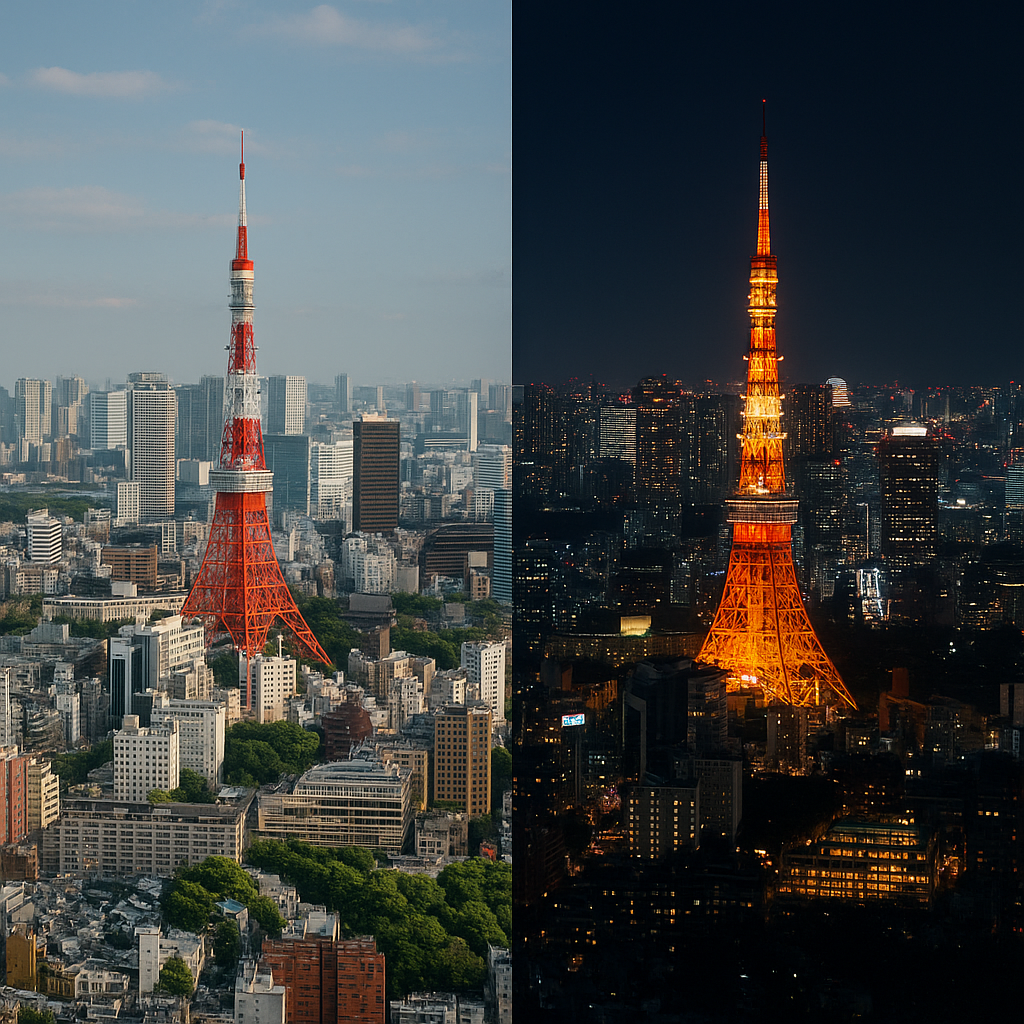
Completed in 1958, Tokyo Tower rose to a height of 333 meters, inspired by the Eiffel Tower but painted in international orange and white to comply with air safety regulations. Commissioned by Nippon Television, it served as a broadcasting mast during an era when Japan was rapidly modernizing. The tower’s lattice design reflects a perfect blend of aesthetic grace and engineering prowess, making it a remarkable example of mid-20th-century architecture.
Designed by Tachū Naitō, often referred to as “Mr. Earthquake,” this tower was built to withstand tremors and heavy winds. Major technical features include:
- Seismic isolation system to absorb quake shocks
- High-strength steel framework assembled with precision rivets
- Paint coating that protects against corrosion and harsh weather
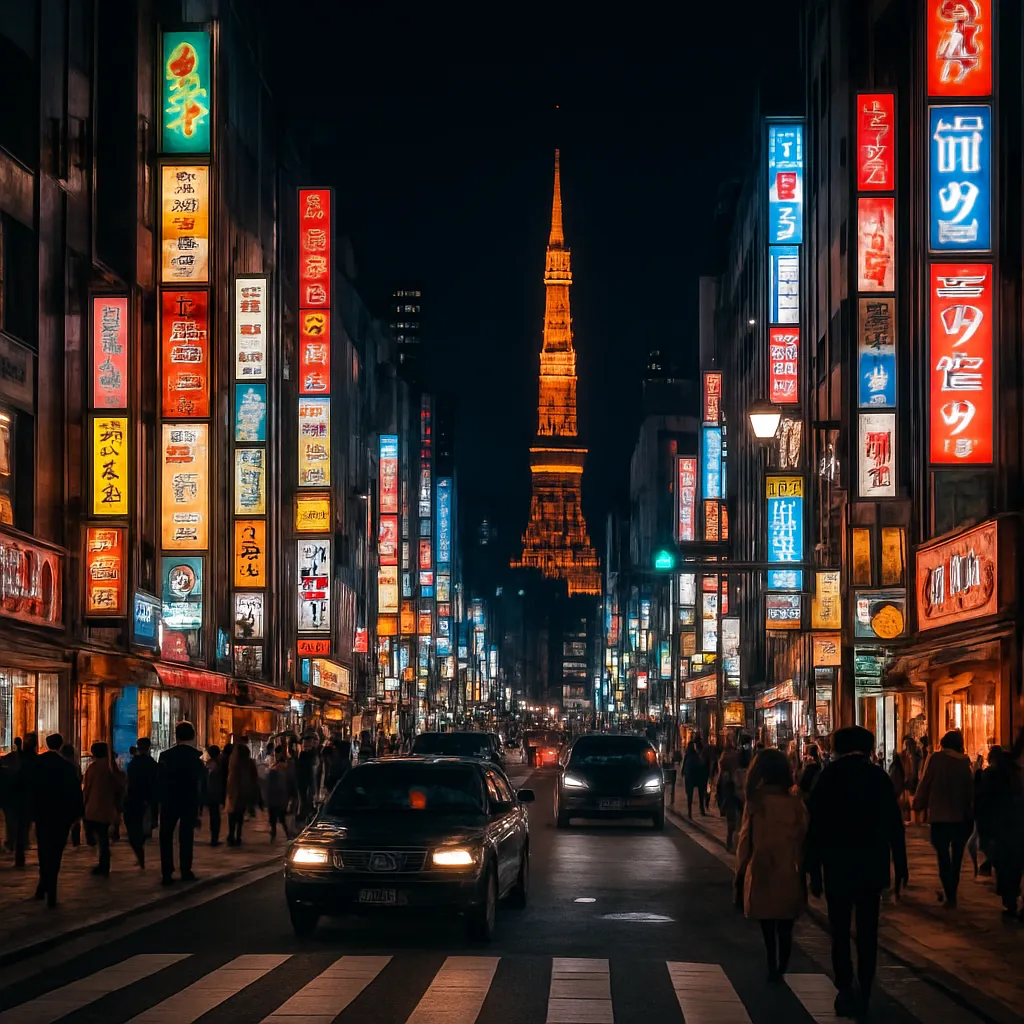
Beyond its functional role, Tokyo Tower became a powerful cultural emblem, appearing in countless films, manga, and advertisements. At night, its symbolic illumination changes with the seasons and special events, casting a mesmerizing glow over the city. Inside, visitors ascend to two observation decks—Main Deck at 150 meters and Top Deck at 250 meters—for a panoramic view of Tokyo’s urban sprawl. Dining facilities, souvenir shops, and exhibition spaces further enrich the experience, making the tower a dynamic hub for both locals and tourists.
Tokyo Skytree Innovation and Design
Fast forward to 2012, when Tokyo Skytree claimed the title of the world’s tallest tower at 634 meters. Its very name incorporates “sky” and “tree” (pronounced “three” in Japanese), signifying its function as a cutting-edge broadcasting platform and a fresh gateway into the heavens. Designed by Nikken Sekkei, Skytree’s profile resembles a traditional Japanese samurai sword, blending modern aesthetics with cultural motifs.
Key innovation points include:
- A central column surrounded by a tri-legged support structure that provides extra stability
- Tuned mass damper system that counteracts seismic forces
- Advanced broadcasting equipment capable of digital transmission across vast distances
The tower also boasts two observation decks: Tembo Deck at 350 meters and Tembo Galleria at 450 meters, the latter featuring a slanted glass corridor nicknamed the “skywalk” for its exhilarating sensation of walking in mid-air. Beyond observation, Skytree Town at its base comprises an aquarium, planetarium, and a vast shopping complex. This multi-purpose development underscores the tower’s role as a modern entertainment and cultural hub.
Cultural Impact and Tourism Appeal
Both towers have carved their places in Tokyo’s vibrant cultural tapestry. Tokyo Tower, with over 50 years of history, is often regarded as the history keeper of the post-war era, while Skytree represents Japan’s unrelenting push towards the future. Together, they draw more than ten million visitors annually, contributing significantly to the local economy and global perception of Tokyo as a world-class tourist destination.
Popular activities and attractions include:
- Seasonal night illuminations—cherry blossom pink in spring, cool blue in winter
- Themed exhibitions showcasing anime, film, and digital art
- Gourmet dining experiences featuring panoramic city views
- Souvenir shops offering traditional crafts and limited-edition collectibles
Social media platforms are flooded daily with photos tagged at both towers, each snapshot serving as a testament to their enduring allure. On clear days, visitors can spot Mount Fuji shimmering on the horizon, adding an extra layer of observation delight. These towers also host seasonal events like fireworks festivals and lantern festivals, further cementing their status as focal points of communal celebration.
Future Prospects and Symbolism
As Tokyo evolves, both Tokyo Tower and Skytree continue to adapt. Plans for interactive light shows synchronized to environmental data, expanded digital art displays, and enhanced broadcast services are already in motion. These initiatives embrace sustainable practices, such as energy-efficient LED systems and solar-powered installations, aligning with global environmental goals.
More than mere structures, these towers embody the spirit of Tokyo—a city that honors its history while relentlessly pursuing progress. Whether you seek to explore the roots of modern broadcasting, marvel at engineering feats, or simply soak in breathtaking city vistas, Tokyo Tower and Skytree offer enduring inspirations. Their silhouettes on the horizon remind us that innovation and tradition can stand side by side, united by the unwavering ambition to reach new heights.