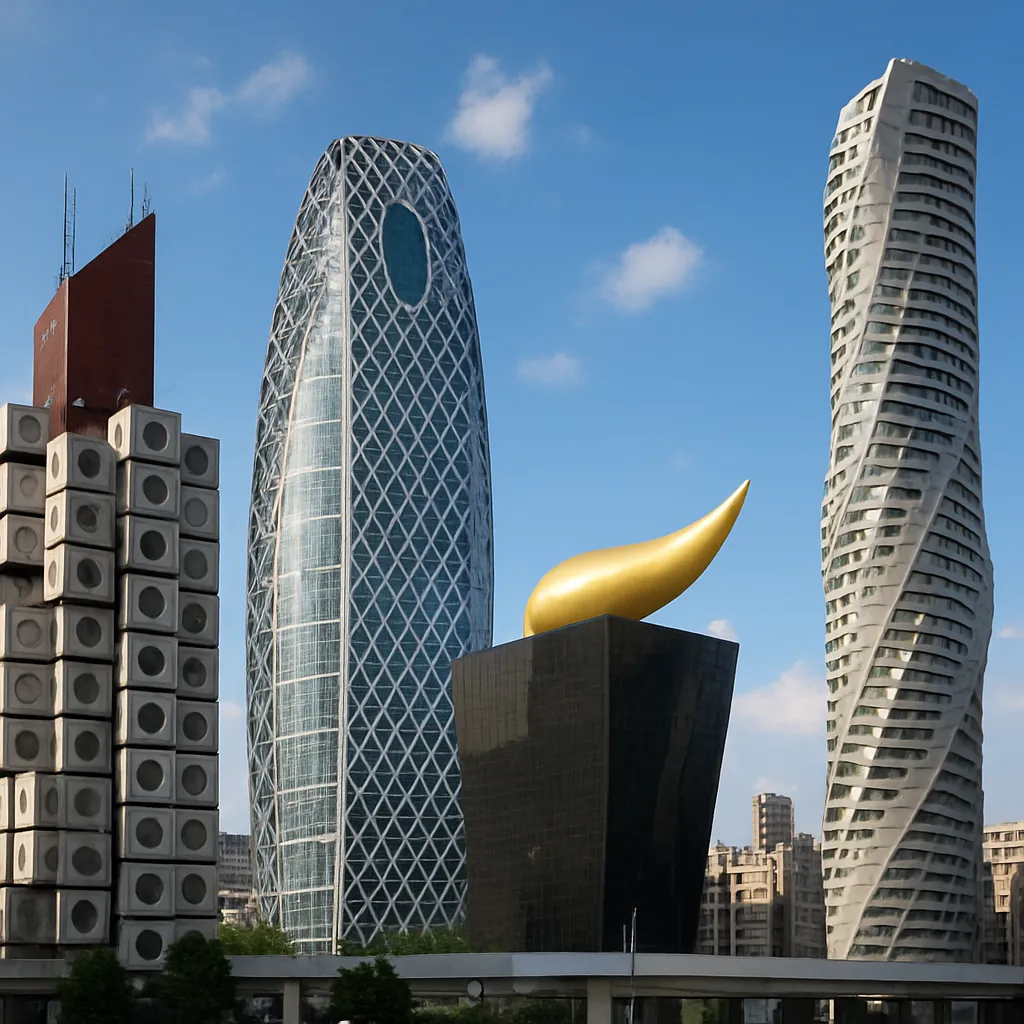
Tokyo’s skyline is a canvas of daring architecture and inventive design, where each structure tells a story of cultural fusion, technological prowess, and artistic ambition. From neon-lit skyscrapers to compact experimental dwellings, the city offers an ever-evolving exhibition of urban creativity. In this article, we explore some of the most unusual buildings scattered across various districts, uncovering the inspiration behind their distinctive forms and the impact they have on Tokyo’s dynamic cityscape.
Architectural Wonders in Shinjuku and Shibuya
In the heart of Tokyo’s commercial hubs, Shinjuku and Shibuya present an array of iconic structures that challenge conventional design norms. These districts are renowned for their constant flux, where landmarks emerge as symbols of innovation and serve as magnets for visitors and locals alike.
Mode Gakuen Cocoon Tower
Rising 50 stories above the Yoyogi area, the Mode Gakuen Cocoon Tower is a striking educational skyscraper hosting three vocational schools. Its dramatic “cocoon” form, conceived by architect Tange Associates, represents a departure from the typical rectangular tower. The organic silhouette is more than aesthetic; it optimizes interior space for classrooms, studios, and communal areas. The tower’s façade of crisscrossing white columns gives this building a knitted appearance, emblematic of growth and metamorphosis.
Nakagin Capsule Tower
Although partially slated for demolition, the Nakagin Capsule Tower remains a testament to Japan’s postwar embrace of modularity. Designed by Kisho Kurokawa in 1972, the tower consists of pre-fabricated capsules that can be attached or detached from two central shafts. Each 10-square-meter unit functions as an apartment or office, complete with its own bathroom and bed. The concept anticipated today’s trends in micro-living and sustainable urban planning, making the tower an enduring beacon of 20th-century radical design.
- Height: 13 stories
- Capsule dimensions: 2.5m x 4m x 2.1m
- Original purpose: Single-person living quarters
Futuristic Designs and Cultural Statements
Beyond downtown’s bustle, Tokyo hosts experimental edifices that marry avant-garde aesthetics with cultural symbolism. Architects collaborate with brands, breweries, and cultural institutions to forge landmarks that stand out in a city celebrated for its eclectic tastes.
Asahi Beer Hall
Designed by Philippe Starck, the Asahi Beer Hall in Sumida District is instantly recognizable by its “Flamme d’Or” – a golden sculpture perched atop a black box. The building comprises a glazed lower section that houses the brewery’s offices and hall, while the giant flame symbolizes the passion and energy inherent in brewing. This playful approach to corporate architecture blurs the line between monument and brand advertisement.
Prada Building Ginza
Herzog & de Meuron’s Prada flagship in Ginza transcends the stereotype of a luxury retail space. Its façade appears to be woven from metallic threads, creating a lattice that filters daylight into a soft, shimmering glow. The interplay of transparency and reflection transforms the store into a piece of interactive art, inviting passersby to experience fashion and artistry in tandem.
Mori Tower and Roppongi Hills
Roppongi Hills, led by the Mori Tower, is a self-contained urban complex integrating offices, museums, and luxury residences. The tower’s gently tapering form and the promenade-level gardens showcase a commitment to combining high-rise living with accessible public spaces. The Mori Art Museum, located on the top floors, offers panoramic views of Tokyo alongside contemporary exhibitions, exemplifying the synergy between city planning and cultural enrichment.
Hidden Gems in Residential and Suburban Areas
Away from the high-rises, Tokyo’s neighborhoods hide smaller-scale experiments in form and function. These sustainable and often overlooked structures contribute to the city’s reputation as a laboratory for residential innovation.
Yougane Architecture House
Set in a quiet corner of Setagaya ward, the Yougane Architecture House features angled roofs and pierced walls that frame changing views of the surrounding garden. The design prioritizes harmony with nature, using natural light and ventilation to reduce energy consumption. Despite its modest footprint, this dwelling radiates a sculptural presence, adding a touch of organic geometry to the suburban streetscape.
Hoshina-no-Yakata—The “House of Stars”
In Nerima Ward, a private residence nicknamed the “House of Stars” dazzles with its perforated façade. At night, strategically placed lighting behind the pattern turns the exterior into a canvas of shimmering constellations. This house exemplifies how lighting design can transform the perception of a simple structure, making it a nocturnal landmark in an otherwise tranquil area.
- Architect: Local design firm
- Key feature: Laser-cut steel façade
- Energy solution: Solar panels integrated into roof
The Intersection of Technology and Tradition
Tokyo’s architects frequently balance cutting-edge materials and methods with local cultural references, yielding unique hybrids that resonate on multiple levels.
Meguro Parasitological Museum
Perhaps Tokyo’s quirkiest museum, this facility is dedicated to the study of parasites and includes a façade adorned with stylized illustrations of microscopic creatures. While it may seem whimsical, the building underscores Japan’s fascination with scientific curiosity and educational outreach. Inside, visitors encounter a blend of minimalist exhibition spaces and vividly colored displays that demystify complex biological phenomena.
Kiyosumi Shirakawa Warehouse Conversion
Once a traditional warehouse in an industrial district, this brick building now hosts a gallery and café. The renovation retained the original timber beams and exposed brick walls, merging them with steel accents and glass partitions. The result is a harmonious dialogue between the old and the new, demonstrating how adaptive reuse can preserve heritage while injecting fresh vitality into urban environments.
Shiroiya Hotel (Adjacent to Tokyo)
Though technically in Takasaki, Shiroiya Hotel’s renovation by Sou Fujimoto Architects strikes a chord with Tokyo’s design ethos. The exterior remains faithful to its 1920s roots, while the interior is reimagined as a network of slender columns and open decks. It serves as an inspiration for smaller-scale hospitality projects within Tokyo, highlighting the potential of minimal interventions to create immersive guest experiences.
Innovative Public Spaces and Green Architecture
Recent projects in Tokyo place emphasis on environmental responsibility, integrating green spaces directly into architectural forms.
Toranomon Hills Forest
This sprawling complex features multiple towers wrapped in verdant terraces and sky gardens. The stepped landscaping not only reduces the heat island effect but also creates publicly accessible parks at various heights. Toranomon Hills Forest is a pioneering example of how vertical forests can become integral elements of dense urban districts.
National Art Center, Tokyo
Designed by Kisho Kurokawa, the center’s undulating glass façade resembles a giant wave, allowing natural light to flood the internal exhibition halls. Its fluid form dissolves the boundary between exterior and interior, while the spacious lobby serves as a civic gathering point. The building’s transparency and openness reflect a commitment to making art an inclusive experience.
Ariake Tennis Park—Tokyo Gateway
Built for international sporting events, this venue features retractable roofs and modular seating systems that adapt to different tournament requirements. The structure employs lightweight tensile membranes and steel trusses, creating a flexible environment for both athletes and spectators. It stands as a blueprint for future multipurpose arenas in urban contexts.