Tokyo’s urban landscape conceals a kaleidoscope of public art that transforms mundane alleys and blank walls into living galleries. From hidden side streets in Shibuya to the bustling thoroughfares of Harajuku, the city’s street art scene offers an immersive journey into local culture, social commentary, and unbridled creative energy. Whether you’re a seasoned art enthusiast or a curious traveler, exploring Tokyo’s murals reveals layers of history, personal narratives, and the vibrant spirit that defines Japan’s capital.
Street Art Culture in Tokyo
Although Tokyo is often associated with high-fashion districts and gleaming skyscrapers, it also nurtures a thriving underground movement where artists repurpose urban surfaces for bold visual statements. Beginning in the late 1990s, the rise of graffiti crews and experimental collectives coincided with global trends in hip-hop culture and Western street art. Local pioneers started to adapt aerosol techniques and stencil work to Japanese sensibilities, blending calligraphy influences with pop-culture imagery.
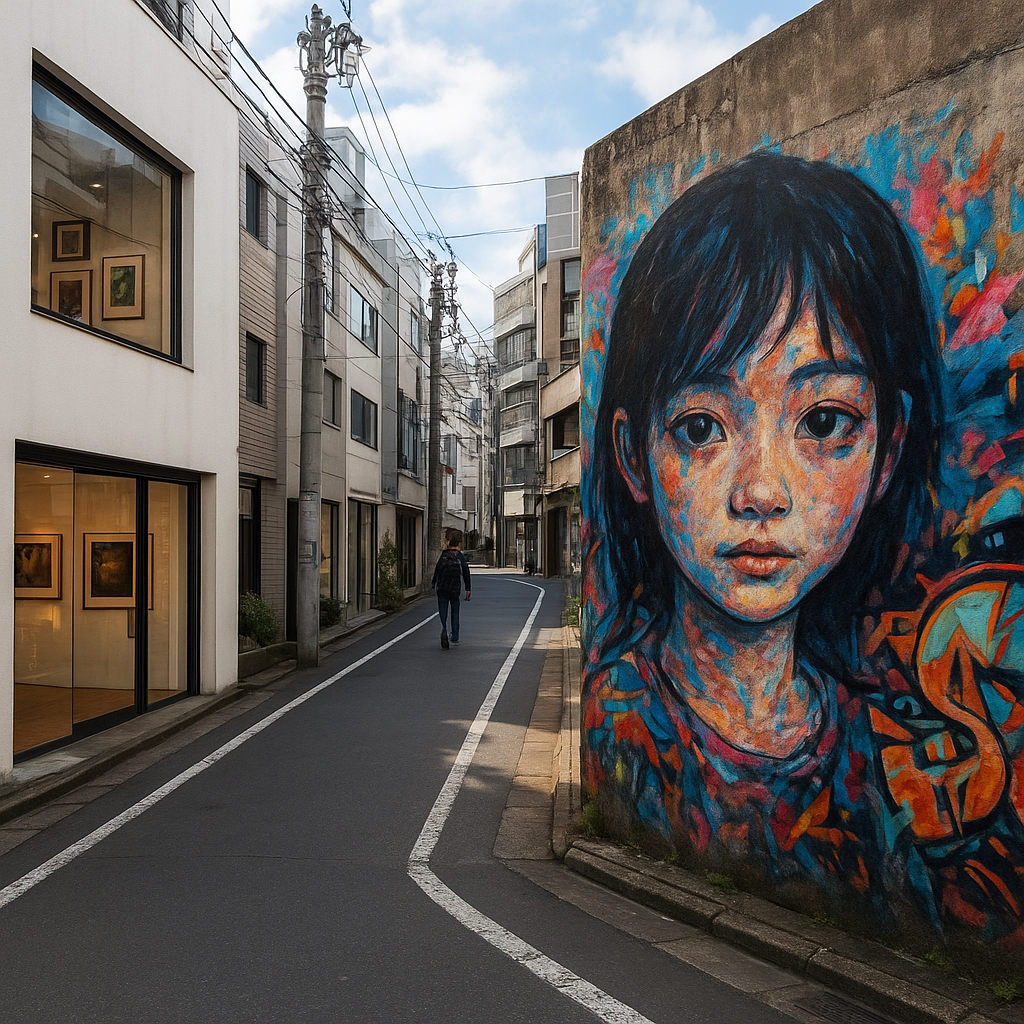
Today, street art in Tokyo ranges from candid political commentary to whimsical character-based pieces inspired by manga and anime. The city’s distinct zoning laws and property regulations have forced artists to seek permission from shopkeepers, landlords, or community centers—resulting in many legal murals that coexist alongside more clandestine tags. This has fostered a unique environment in which collaboration between artisans, merchants, and neighborhood associations transforms blank façades into communal landmarks.
Such public art interventions not only enrich local streetscapes but also generate important dialogues about urban renewal and cultural identity. By reimagining neglected corners through color and form, street artists contribute to the ongoing transformation of Tokyo’s urban fabric—inviting passersby to reconsider everyday spaces as incubators of expression.
Exploring Iconic Neighborhoods
While murals can be spotted almost everywhere in the city, certain districts have gained reputations as hotbeds for street art enthusiasts. Each locale offers a distinct flavor of Tokyo’s ever-evolving artistic tapestry:
- Shibuya – Known for its famed scramble crossing, Shibuya’s side streets lead to tucked-away walls featuring large-scale characters, abstract patterns, and occasional social messages. Look for work near Center Gai and around Dogenzaka.
- Harajuku – The epicenter of youth culture and fashion, Harajuku’s back alleys in Ura-Harajuku showcase collaborative murals by emerging artists, often incorporating neon accents and fashion-inspired motifs.
- Shimokitazawa – Renowned for its indie vibe, the narrow lanes here host stenciled portraits, paste-up prints, and graffiti pieces that reflect the area’s musical heritage and bohemian ethos.
- Ueno – Adjacent to museums and parks, Ueno features murals that celebrate local history, nature, and the revival of once-forgotten industrial zones into art-centric zones.
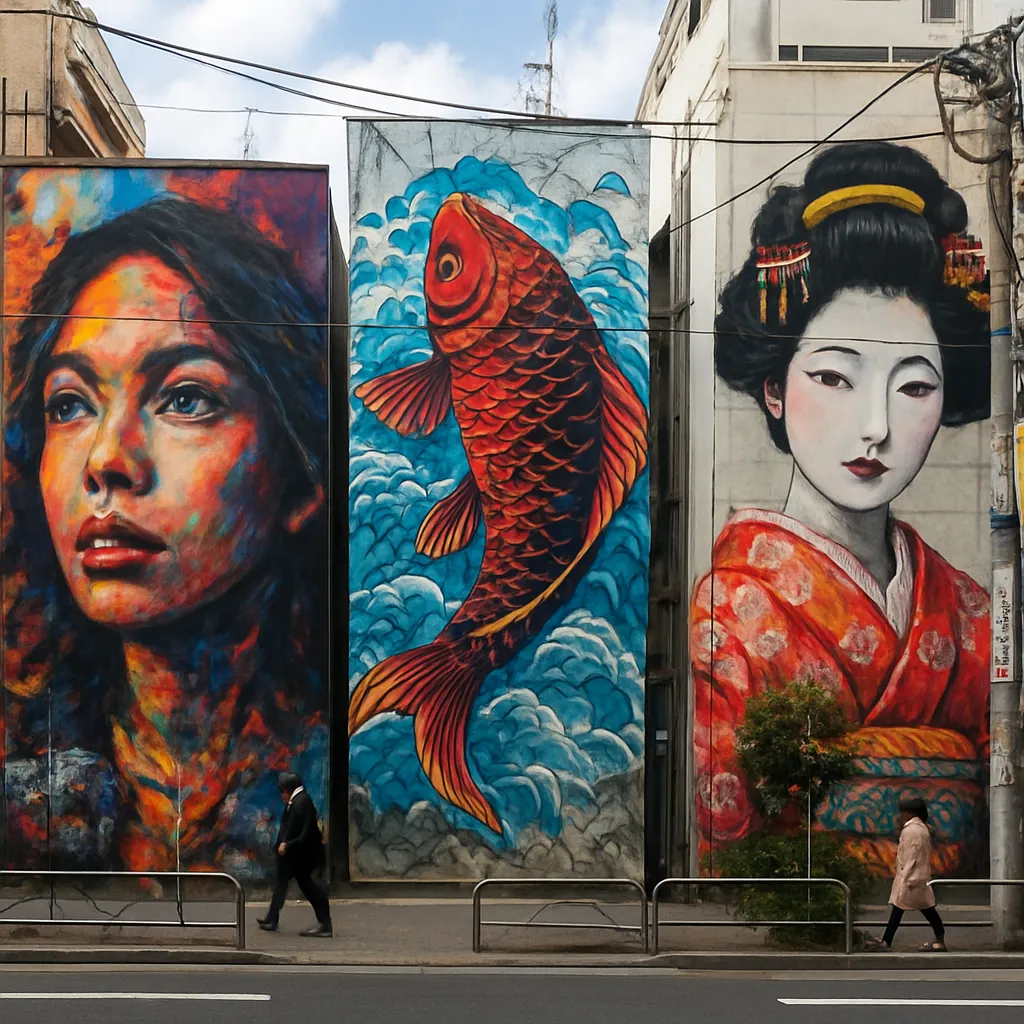
- Asakusa – Blending traditional temples with modern street art, Asakusa’s murales often play with contrasts—vibrant graphics set against centuries-old architecture, offering a dialogue between past and present.
Venturing beyond these hubs, neighborhoods like Kichijoji and Nakameguro also reveal hidden gems. A leisurely stroll often uncovers spontaneous works by up-and-coming creators, so keep your camera handy and your eyes peeled for unexpected splashes of color.
Notable Artists and Exceptional Murals
Several artists have left an indelible mark on Tokyo’s street art scene, each bringing their unique vision to the city’s walls. Among them:
- Verdy – Famous for his “Girls Don’t Cry” brand, Verdy’s large-scale pink and red motifs combine pop art aesthetics with social commentary.
- Lady Aiko – A pioneer of the Usugrow collective, she integrates delicate line work with bold colors, often portraying feminine icons and ethereal landscapes.
- Coak – Known for geometric abstractions and surreal creatures that sprinkle the backstreets of Koenji, Coak’s style bridges the gap between street art and immersive installation.
- Jun Inagawa – Blending graffiti with traditional Japanese themes, Inagawa’s work explores identity, folklore, and the interplay between urban life and nature.
- Masago – The mysterious graphic designer turned muralist captivates with vivid portraits and neon-infused backgrounds, often portraying cultural icons in unexpected contexts.
Beyond individual creators, collectives like “Tokyo Graffiti Crew” and “Wooster Collective Tokyo” have organized large-scale paint jams and festivals, inviting both local and international talents to collaborate on ambitious collaborative murals. These dynamic installations often become landmarks themselves, drawing social media attention and encouraging repeat visits.
Techniques, Materials, and Inspirations
Tokyo’s street artists employ a diverse toolkit to bring their visions to life. Standard aerosol cans remain ubiquitous for quick, bold strokes, while detailed stencils and wheatpaste posters allow for intricate layering and rapid reproduction of complex images. Some creators favor acrylic rollers and brushes to achieve rich textural effects on brick, concrete, and metal surfaces.
Inspirations range from classic ukiyo-e prints to contemporary pop culture icons. Many artists experiment with reflective paints and interactive designs that change appearance depending on light conditions or the viewer’s perspective. This playful approach not only highlights the city’s technological prowess but also engages pedestrians in an evolving visual experience—turning everyday strolls into moments of discovery.
Underpinning these diverse methods is a shared commitment to community engagement. Workshops in local schools, collaborative mural days with neighborhood volunteers, and open-studio events help demystify street art and encourage new talent to join the movement. In many districts, property owners actively commission artists to revitalize empty storefronts, creating safe and legal canvases that celebrate local heritage.
Community Projects and Guided Tours
Several organizations and charities have embraced street art as a means of social outreach. Nonprofit groups host mural festivals aimed at youth empowerment, offering free training sessions in inspiration-driven art techniques. These programs often culminate in community-installed works that stand as testaments to cooperation and civic pride.
For visitors seeking deeper insight, guided tours led by local experts provide curated walks through Tokyo’s most diverse art districts. Some tours incorporate augmented reality apps that overlay digital renderings onto physical murals, offering behind-the-scenes content such as time-lapse videos, artist interviews, and conceptual sketches.
Whether you join a small-group excursion or venture independently with a downloadable map, engaging with Tokyo’s street art fosters appreciation for the city’s ever-evolving landscape. Each mural becomes a chapter in Tokyo’s urban narrative—an ongoing collaboration between talented creators and the communities they enrich.