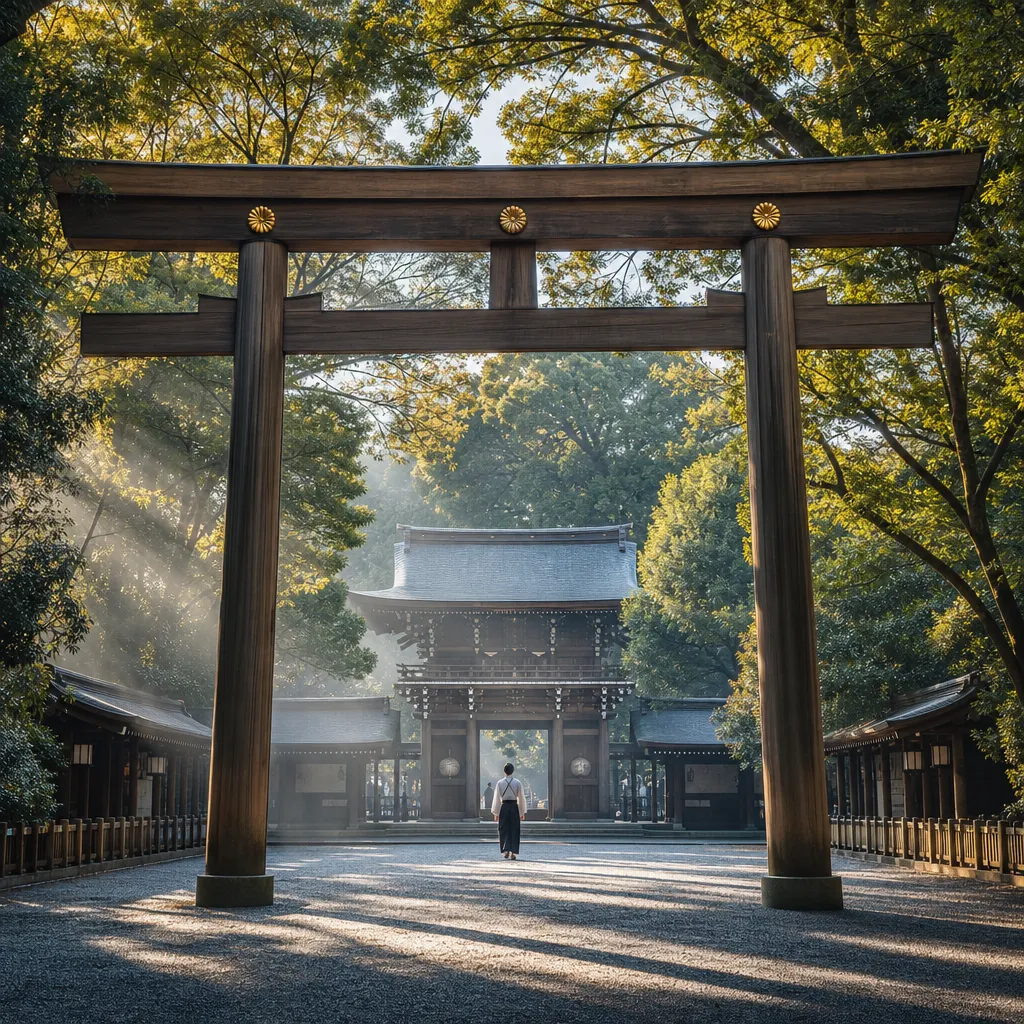
Meiji Shrine is one of the most important Shinto sites in Tokyo, but it is also one of the easiest major sights to misunderstand. Many first-time visitors imagine a compact temple complex in the middle of Harajuku; in reality, it is a large forested shrine precinct beside some of the busiest districts in the city. The appeal is not only the main shrine buildings, but the long approach through woodland, the contrast with nearby urban Tokyo, and the sense of ceremony that still shapes how the place is used today. If you plan the visit well, Meiji Shrine works equally well as a quick cultural stop, a quiet morning walk, or part of a wider day in Harajuku, Omotesando, and Yoyogi.
Meiji Shrine, or Meiji Jingu, is in Shibuya ward, on the western side of central Tokyo. It sits between the Harajuku and Yoyogi areas, with easy access from Harajuku Station on the JR Yamanote Line and Meiji-jingumae Station on the Tokyo Metro network. Although the shrine is closely associated with Harajuku, the atmosphere changes immediately once you enter the wooded grounds: traffic noise fades, paths widen, and the pace becomes slower and more reflective.
What Meiji Shrine Is and Why It Matters
Meiji Shrine is a Shinto shrine dedicated to Emperor Meiji and Empress Shoken. Completed in the early 20th century, it was created as a place to honor their spirits after the Meiji era, a period strongly associated with Japan’s modernization. Unlike older temple districts where you may find many small historical structures packed together, Meiji Shrine is defined by its broad forest approach and formal shrine architecture set within a large man-made woodland.
This is a Shinto site, not a Buddhist temple, and that matters for both atmosphere and etiquette. Visitors come for sightseeing, but the shrine is also an active place of worship where you may see local worshippers, ceremonial processions, or traditional weddings. The experience is at its best when approached as a living cultural space rather than just a photo stop.
Where It Is and the Best Ways to Get There
The most convenient access points are from the Harajuku side and the Yoyogi side. For many visitors, the simplest route is via Harajuku Station, which places you near one of the major entrances and makes it easy to combine the shrine with Takeshita Street, Omotesando, or nearby parks. Meiji-jingumae Station is also useful if you are arriving by Tokyo Metro.
If you are coming from Shinjuku, the Yoyogi side can be practical, especially if you want a slightly calmer start than the Harajuku approach. The shrine grounds are large, so “being nearby” on the map does not mean you are at the main hall immediately. Expect a proper walk from the entrance through the forested approach before reaching the central worship area.
| Access Point | Useful Station/Area | Best For | Area Character |
|---|---|---|---|
| Harajuku approach | Harajuku Station / Meiji-jingumae area | First-time visitors combining the shrine with Harajuku or Omotesando | Busy, youthful, shopping-focused outside the gates; quiet once inside |
| Yoyogi approach | Yoyogi area | Visitors coming from Shinjuku or seeking a slightly calmer entrance | More transport-oriented and less tourist-heavy than Harajuku |
What to See Inside the Shrine Grounds
The approach itself is part of the visit. The huge wooden torii gates are among the most memorable features, marking the transition from city to sacred space. The broad gravel paths, lined by tall trees, create a strong sense of separation from the surrounding neighborhoods.
Near the main route, many visitors stop at the decorative sake barrel display and the wall of wine barrels, both often photographed because they visually connect ritual tradition with the international outlook of the Meiji period. These are not the main religious focus of the site, but they are a well-known part of the approach.
At the main shrine complex, you will find the central worship area where people offer prayers. This is the heart of the visit. Depending on timing, you may also notice formal events, shrine staff in traditional dress, or wedding parties moving through the grounds. If you want more than the basic route, the Meiji Jingu Museum and the Inner Garden are separate points of interest often considered by visitors who have extra time and a deeper interest in history, court culture, or landscape design.
How to Visit Respectfully
Basic shrine etiquette is straightforward. At the purification pavilion near the main area, visitors may cleanse hands and mouth if they wish to follow the custom. At the main worship hall, people typically offer a coin, bow, clap, pray, and bow again, though many international visitors simply observe quietly.
Keep to the sides of the main approach where appropriate, as the center of the path is traditionally regarded as the route of the deity. Avoid loud phone calls, eating while walking through the sacred core, or treating ceremonies as staged entertainment. Photography is generally fine outdoors for personal travel use, but be restrained around worshippers and formal rituals, and pay attention to any posted restrictions in museum or garden areas.
This is one of the easiest cultural sites in Tokyo for travelers with no Japanese language ability. Signage is usually manageable, and the structure of the visit is intuitive. Respectful behavior matters more than perfect knowledge of ritual.
Best Time to Visit
Morning is usually the most rewarding time. The forest feels cooler, quieter, and more spacious, and the contrast with nearby Harajuku is strongest before the shopping streets become crowded. Early visits also suit photographers who want softer light and fewer people on the main paths.
Late morning through afternoon can be much busier, especially on weekends, holidays, and during popular travel seasons. New Year is particularly significant: Meiji Shrine is one of the country’s best-known hatsumode destinations, when huge numbers of people visit for the first shrine prayer of the year. That can be culturally fascinating, but it is not the best time if you want calm.
Rain can actually improve the atmosphere if you do not mind wet conditions. The tree canopy, gravel paths, and subdued architecture often feel especially atmospheric in damp weather, though umbrellas and appropriate footwear are useful.
How Long to Spend and How to Combine It with Nearby Areas
A basic visit can be done relatively efficiently, but many people underestimate the walking distance within the grounds. If your goal is simply to enter, walk to the main hall, and return, allow enough time for a proper stroll rather than treating it as a station-side stop. If you also want to see the museum or inner garden, build a more relaxed half-day plan.
The shrine combines especially well with several nearby districts:
- Harajuku: Best if you want to contrast the calm of the shrine with youth fashion, sweets, and busy pedestrian streets.
- Omotesando: Good for architecture, higher-end shopping, design stores, and cafés after the shrine.
- Yoyogi Park: Convenient for an outdoor day, especially on mild weekends.
- Shibuya: Possible as part of a longer day, though the mood shift from sacred forest to major commercial center is dramatic.
If you prefer a more reflective visit, pair Meiji Shrine with Omotesando or the museum rather than the most crowded parts of Harajuku.
Who It Suits Best
Meiji Shrine works well for first-time visitors because it is central, culturally important, and easy to fit into a standard sightseeing itinerary. It is also good for solo travelers who want a quiet walk, couples looking for a less hectic stop between shopping areas, and photographers interested in framing large torii gates, forest paths, and formal architecture.
Families can visit comfortably because the grounds are spacious and stroller-friendly in broad terms, though the gravel surfaces may feel slower than smooth pavement. Travelers with limited time should note that this is not a fast indoor attraction; the value comes from walking and atmosphere. If someone in your group dislikes shrines or extended outdoor strolling, keep expectations realistic.
For repeat visitors, Meiji Shrine remains worthwhile because the experience changes with season, weather, and timing more than many urban attractions do.
Practical Tips Before You Go
- Wear comfortable shoes: the shrine grounds involve more walking than many visitors expect.
- Do not confuse it with a temple: this is a Shinto shrine with different etiquette and symbolism.
- Check current operating information: museum access, garden entry, and seasonal arrangements can change.
- Visit early for atmosphere: this is the simplest way to avoid heavier crowds.
- Allow time for the approach: the walk through the forest is part of the attraction, not dead space between entrance and shrine.
- Keep your route flexible: Harajuku can feel intensely crowded on weekends, so exiting via a quieter side may be more pleasant if you are not specifically shopping there.
Common Mistakes to Avoid
The biggest mistake is rushing. Because Meiji Shrine sits next to famous commercial districts, some visitors treat it as a quick box to tick before moving on. That usually means arriving at the busiest time, walking quickly to the main hall, taking a few photos, and leaving without appreciating why the site feels so different from the streets outside.
Another common mistake is planning too many nearby stops in one morning. Harajuku, Omotesando, Yoyogi Park, and Shibuya can all fit geographically, but not always comfortably in one relaxed day. If Meiji Shrine is important to you, give it enough time to breathe.
Finally, be careful with seasonal expectations. You may see dramatic wedding processions or especially quiet paths, but these are not guaranteed on demand. The shrine’s appeal is consistent, yet the exact atmosphere varies from day to day.
FAQ
What area is Meiji Shrine in?
It is in Shibuya ward, between the Harajuku and Yoyogi areas in central Tokyo. Most visitors approach from Harajuku Station or Meiji-jingumae Station.
How do I get to Meiji Shrine by public transport?
The most common route is to use Harajuku Station on the JR Yamanote Line or Meiji-jingumae Station on the Tokyo Metro lines. If you are coming from the Shinjuku side, Yoyogi can also be a practical approach area.
How much time should I allow for a visit?
Allow enough time for a proper walk through the grounds and time at the main shrine area. If you also plan to visit the museum or inner garden, a more relaxed half-day is better.
Is Meiji Shrine suitable for families?
Yes. The grounds are spacious and relatively easy to navigate, though families should be prepared for outdoor walking on gravel paths.
What is the best time of day to visit?
Morning is usually best for a quieter atmosphere, softer light, and fewer people. Weekends and holidays tend to be busier than weekday mornings.
Is photography allowed?
Outdoor photography is generally part of the visit, but visitors should be respectful around worshippers, ceremonies, and any posted restrictions in specific areas such as museum spaces.
Do I need a reservation?
No reservation is needed for the main shrine grounds. If you are interested in special areas or events, check official information in advance.
What should I check before visiting?
Check official information for current access details, museum and garden arrangements, and any seasonal notices. This is especially important around major holidays and New Year.
Sources
- Meiji Jingu Official Website
- GO TOKYO (Tokyo Convention & Visitors Bureau)
- Japan National Tourism Organization